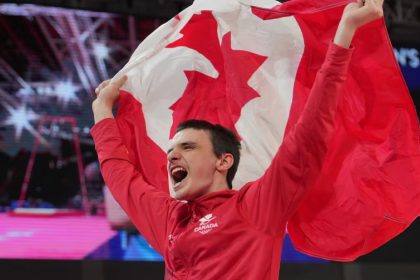






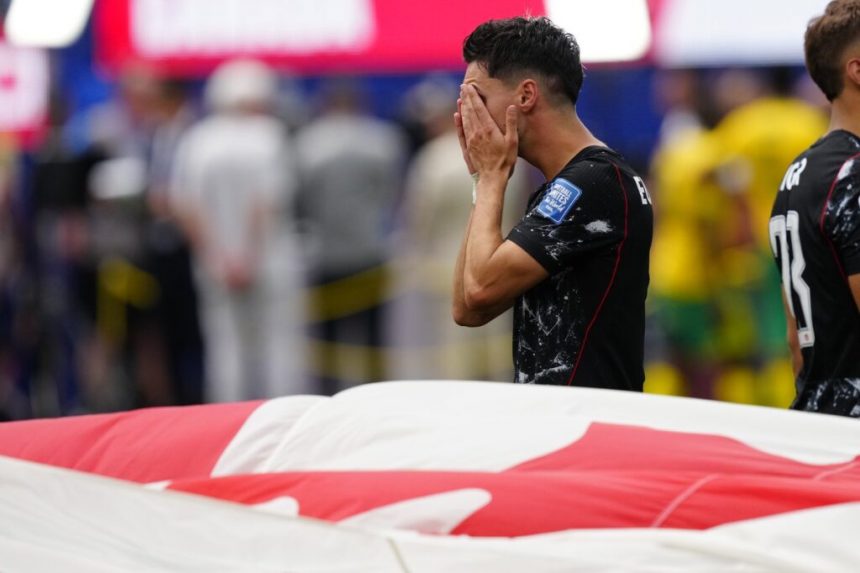
For a generation of Newfoundland and Labrador kids, the summer of 2026 rewrote what was possible in a Canadian jersey. Playing as co-hosts of the FIFA World Cup, Canada’s men reached the Round of 16 — the deepest run in the program’s history — and the ripple reached all the way to the island’s soccer pitches, where young players suddenly had a national team worth idolizing.
Canada’s tournament had genuine drama. After finishing second in Group B — a 1-1 draw with Bosnia and Herzegovina, a resounding 6-0 win over Qatar, and a 1-2 loss to Switzerland — the Canadians made history in the Round of 32, beating South Africa 1-0 on June 28 for their first-ever men’s World Cup knockout victory. The winner came from Stephen Eustáquio, a long-range strike in second-half stoppage time. The run ended on July 4 in Houston, where Morocco won 3-0, with Azzedine Ounahi scoring twice. But the elimination did little to dim what the team had achieved. “This sport has a big future because of you guys,” head coach Jesse Marsch told his players after the South Africa win. “You should be so proud of who you are.”
In Newfoundland, the effect on youth soccer was immediate and, crucially, homegrown. “The kids aren’t walking around with just Messi jerseys, or Ronaldo, they’re wearing Alphonso Davies sweaters,” said Brent Hennebury, technical director of Soccer NL. His point captured a shift: for the first time, young Newfoundlanders can follow a genuinely competitive Canadian side featuring stars like Davies and Jonathan David, rather than adopting another nation’s team by default. National pride, not borrowed allegiance, is driving the enthusiasm.
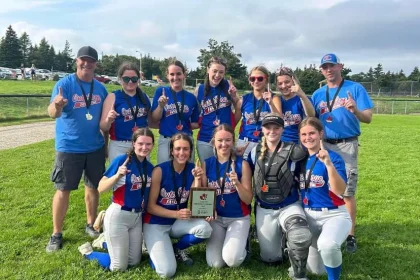
That energy is being channelled into participation. The BMO-sponsored “Girls Play NL!” initiative, run by the Newfoundland and Labrador Soccer Association, operated across multiple locations in the summer of 2026 with two streams — one introducing young players to the game, another training teenage girls as coaches. Local coverage tied the program directly to Canada’s World Cup participation and to strong recent showings by the province’s women’s teams at national competition, framing the moment as a chance to convert inspiration into registration.
The timing is significant. A World Cup on home soil is a once-in-a-generation catalyst, and its value is measured less in the tournament result than in what follows — whether a spike in interest translates into more kids joining clubs, more girls staying in the game, and more coaches to sustain them. Newfoundland’s geography and climate make soccer a harder sell than hockey in some seasons, which is precisely why a visible, aspirational national team matters so much to the grassroots.
A note on sourcing: several CBC Newfoundland pieces documented the reactions of local youth and coaches, but their full text could not be independently retrieved for this article; the direct quote used here is from Soccer NL via VOCM. Canada’s match results and Marsch’s post-match remarks are drawn from national and international match reporting.


Sources: Olympic.ca — Canada’s run · Al Jazeera — Canada 1-0 South Africa · VOCM — Soccer NL · NTV — BMO Girls Play NL